The Great British iPhone Swindle
Every autumn, like clockwork, British consumers collectively lose their minds. Apple announces their 'groundbreaking' new iPhone, and suddenly millions of perfectly functional devices across the UK are deemed obsolete overnight. But here's the uncomfortable truth: you're probably being conned into buying the same phone you already own, just with a different number stamped on the back.
Last year alone, UK consumers spent over £4.2 billion on new iPhones. Yet most of these 'upgrades' delivered features that could have been unlocked, replicated, or accessed on their existing devices for free. It's the greatest magic trick in modern commerce, and Apple are the undisputed masters.
The Psychology Behind Your Wallet
Apple's annual upgrade cycle isn't about technology—it's about psychology. They've weaponised our fear of missing out, creating artificial urgency around incremental improvements that barely register in real-world usage.
Consider the iPhone 14 to iPhone 15 transition. Apple's marketing screamed about 'revolutionary' changes, yet the core improvements were USB-C (which Android phones had for years), a slightly better camera, and marginal performance gains that 99% of users would never notice. Meanwhile, your iPhone 14 received iOS 17, delivering many of the same software features for absolutely nothing.
Features You Already Own (But Don't Know It)
Here's where it gets genuinely infuriating. Many 'new' iPhone features are simply software updates or settings buried so deep in your current device that Apple can repackage them as innovations:
Portrait Mode Enhancements: Available through third-party camera apps on older devices, often with better results than Apple's native implementation.
Battery Health Optimisation: Hidden in Settings > Battery > Battery Health & Charging on devices going back to the iPhone 6s.
Advanced Security Features: Face ID improvements are largely software-based. Your existing Face ID is already more secure than most people realise.
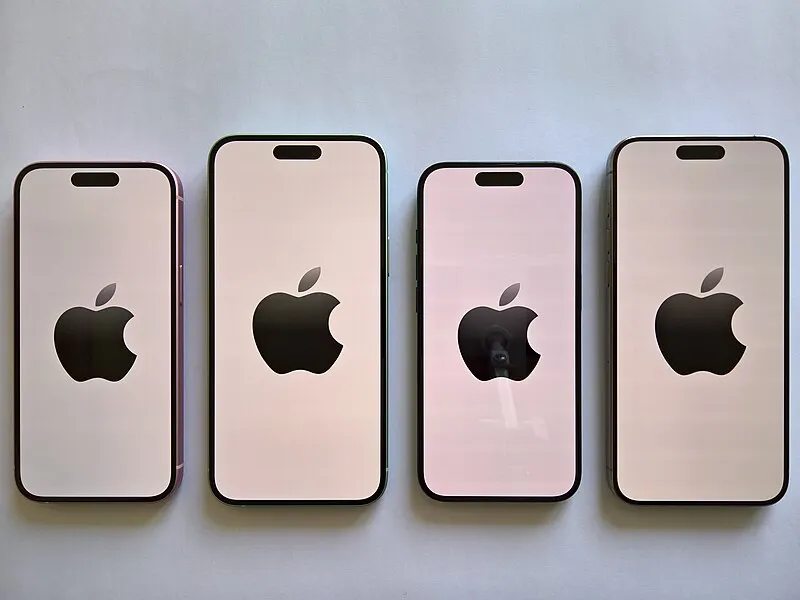 Photo of Face ID, via Wikidata/Wikimedia Commons
Camera Improvements: Professional photography apps can unlock manual controls and RAW shooting on older iPhones that Apple claims 'aren't capable' of these features.
The Real Generational Leaps vs Marketing Fluff
Not all iPhone upgrades are cons. Genuine technological leaps do occur, but they're rarer than Apple's marketing suggests. Here's how to spot the difference:
Real Upgrades Worth Considering:
- iPhone 6s to iPhone X (Face ID, edge-to-edge display)
- iPhone 8 to iPhone 12 (5G, significant camera improvements)
- Any device older than four years to current generation
Marketing Fluff That Costs You Money:
- Annual camera 'improvements' that require pixel-peeping to notice
- Processor speed increases you'll never utilise
- Colour variations (seriously, you're buying a case anyway)
- Storage increases when cloud storage costs pennies
The Hidden Cost of Upgrade Addiction
Let's do some uncomfortable maths. The average British iPhone user upgrades every 2.3 years, spending approximately £800 per device. Over a decade, that's £3,478 on phones alone—not including contracts, cases, or accessories.
Now consider Sarah from Manchester. She bought an iPhone 12 in 2020 for £799. It still runs the latest iOS, takes excellent photos, and handles every task she throws at it. But Apple's marketing convinced her to 'upgrade' to an iPhone 14, then an iPhone 15. She's spent £2,397 on phones that perform virtually identically for her actual usage patterns.
Your Anti-Upgrade Survival Guide
Before you fall for Apple's next marketing blitz, ask yourself these questions:
The Performance Test: Does your current iPhone struggle with daily tasks? If it opens apps quickly, takes decent photos, and doesn't crash regularly, you don't need an upgrade.
The Feature Audit: List five specific things you want your phone to do that it currently can't. If you can't easily name five genuine limitations, you're not ready for an upgrade.
The Financial Reality Check: Calculate the true cost of upgrading, including selling your current device, buying the new one, and any contract changes. Is that amount worth the marginal improvements?
When Upgrades Actually Make Sense
Sometimes, upgrading is genuinely worthwhile. Consider it when:
- Your device is more than four years old
- Battery health has dropped below 70% and replacement costs approach £200
- You're experiencing regular crashes or severe performance issues
- Your current device lacks essential connectivity (like 5G in areas where it matters)
- You're a professional photographer/videographer who needs cutting-edge camera tech
Breaking Free from the Cycle
The most liberating realisation? Your three-year-old iPhone is still a technological marvel. It's more powerful than laptops from a decade ago, takes photos that would have required professional equipment in the past, and connects you to the entire world's knowledge instantly.
Apple's genius lies in convincing us that this miracle device becomes inadequate the moment they announce its successor. It doesn't. Your iPhone 12, 13, or 14 will serve you brilliantly for years to come, saving you thousands while delivering virtually identical performance to whatever Apple launches next September.
The Bottom Line
Every September, Apple will unveil their 'most advanced iPhone ever.' The marketing will be slick, the features will sound revolutionary, and the upgrade itch will be real. But remember: the most advanced iPhone ever is probably already in your pocket, and it's more than capable of everything you actually need it to do.
The real upgrade isn't buying a new phone—it's upgrading your resistance to marketing manipulation. Your wallet will thank you, and your perfectly functional iPhone will keep serving you brilliantly while others queue up to buy the same device they already own.